
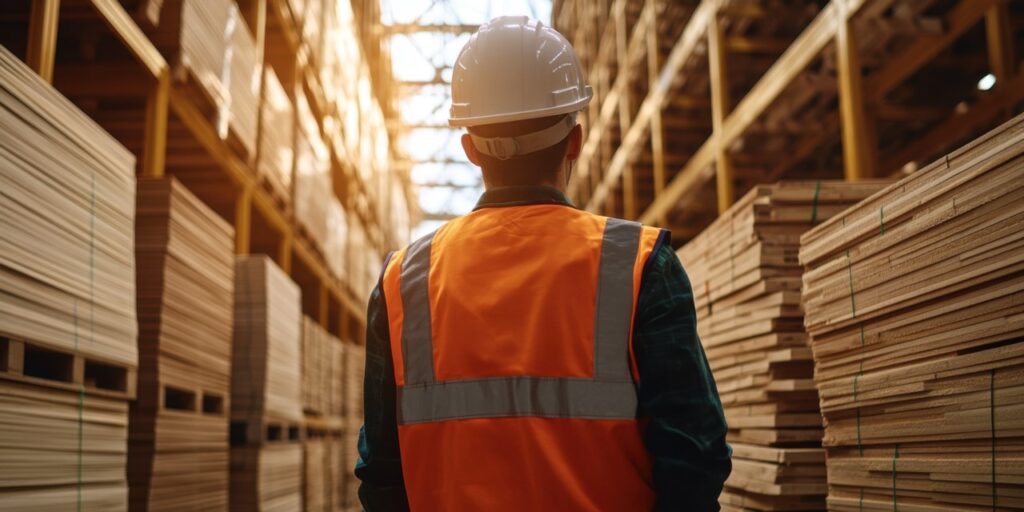
Whether you’re framing a new build or laying hardwood floors, choosing the wrong lumber products or mishandling the right ones can derail your project before it starts. Here’s what experienced builders know: beginners often learn the hard way.
Every builder, at some point, has opened a delivery, walked into a job site, or pulled from the pile only to realize something went wrong. The lumber is bowed. The grade is off. The moisture content wasn’t checked. These aren’t rare disasters; they’re avoidable mistakes that happen on job sites every week.
As a full-service lumber company, we’ve seen these errors up close. Here are the seven most costly lumber mistakes and how to fix them before they cost you.
The 7 Mistakes
Mistake 1 – Skipping moisture content checks
Lumber that isn’t properly dried will shrink, warp, and crack after installation, especially for hardwood floor products. Wood continues to move with humidity changes long after a build is complete. According to the USDA Forest Products Laboratory, wood continues to expand and contract with changes in moisture content even after installation, which is why proper acclimation and moisture testing are critical before use.
The fix
Use a moisture meter before any install. For hardwood flooring, target 6–9% MC for most interior applications. Let the lumber acclimate on-site for 48–72 hours before use.
Mistake 2 – Ordering the wrong lumber grade
Not all lumber products are created equal, and paying for Select when #2 Common will do, or vice versa, wastes money or causes callbacks. Grade confusion is especially common with hardwood floor products, where “character grade” versus “clear grade” changes the entire look of a space.
The fix
Talk to your lumber company supplier before ordering. Match the grade to the application: structural framing, finish carpentry, and hardwood flooring all have different requirements.
Mistake 3 – Underestimating the waste factor
Running short mid-project is one of the most expensive mistakes in hardwood flooring and finish work. Dye lots change, stock sells out, and re-orders delay jobs by days or weeks.
The fix
Add 10–15% overage for straight-lay hardwood flooring and 15–20% for diagonal or herringbone patterns. For structural lumber products, a 5–10% buffer is standard practice.
Mistake 4 – Mixing species without knowing their properties
According to the APA – The Engineered Wood Association, proper selection and specification of wood products is essential for structural performance and long-term durability in both residential and commercial construction.
Different wood species expand, contract, and wear at different rates. Mixing species in hardwood flooring without accounting for this leads to gaps, height differences, and a floor that looks wrong within a season.
The fix
If blending species is a design goal, consult with your hardwood floor products supplier about compatibility. Stick to the same Janka hardness range and similar moisture movement coefficients.
Mistake 5 – Poor on-site lumber storage
Even premium lumber products from a reputable lumber company can be ruined in 48 hours if left exposed to rain, direct sun, or sitting directly on concrete. This is especially damaging for hardwood flooring, which absorbs moisture rapidly from below.
The fix
Store lumber off the ground on stickers, covered with breathable tarps. Never seal lumber tightly in plastic; it traps moisture. Keep hardwood floor products inside the building whenever possible.
Mistake 6 – Choosing price over species for hardwood floors
Cheaper hardwood flooring options can seem like a win at purchase, but softer species in high-traffic areas dent, scratch, and lose finish quickly. The cost of refinishing or replacing is far greater than the upfront savings.
The fix
Match species to traffic level. Hickory, white oak, and hard maple are excellent high-traffic hardwood floor products. Reserve softer species like pine for bedrooms or low-use spaces.
Mistake 7 – Not working with a full-service lumber company
Sourcing lumber products from multiple suppliers without a consistent relationship means inconsistent quality, no accountability, and no one who knows your project. Builders who work with a trusted lumber company as a partner, not just a vendor, catch problems before they become job site disasters.
The fix
Build a relationship with a lumber company that can advise on product selection, grade, moisture, and lead times for every project, from structural framing to finished hardwood flooring.
The bottom line
Ready to order the right lumber products?
The best builders aren’t the ones who never make mistakes; they’re the ones who’ve learned to avoid them systematically. Whether you’re sourcing hardwood floor products for a high-end renovation or lumber products for a large commercial frame, working with the right lumber company from the start is the single biggest variable in your project’s success.
At Strata Forest Products, we supply everything from structural framing lumber to premium hardwood flooring, and we’re here to help you get the spec right the first time.
Talk to our team about your next project. We’ll help you select the right grades, species, and quantities from the start.